AI in 2025: From Gemini Pro Copilots to Global Tech Shifts
Author: Staff Writer

Global AI adoption in 2025 has shifted from novelty to norm. Enterprises, startups, and individual users are carving out daily workflows around copilots, translators, and creative assistants. The current wave is characterized by a search for more capable, more context-aware assistants who can operate across tasks—drafting emails, outlining articles, proposing code, and even helping restructure complex data. In this environment, Gemini Pro—Google's advanced conversational model—emerges as a central case study in what it means to work with AI rather than simply use AI. The available materials describe not only capabilities but also practical guidance on how to coax more value from the system: crafting prompts with richer context, teaching the model your goals, and using it as a true partner in problem solving. However, the landscape is not uniform; access is gated by paid plans, and some of the more powerful features are restricted to professional or corporate tiers. The result is a split economy of AI where power remains concentrated behind subscriptions, while free tiers still offer meaningful productivity boosts for casual users. The trend line suggests a future where AI is increasingly embedded in everyday tools—within word processors, messaging apps, photo editors, and browsers—so that the barrier to collaborative AI lowers while the complexity of prompt engineering grows more intuitive.
To understand the practicalities, it helps to look at how users are asked to prompt Gemini Pro and what counts as better prompts. Industry observers describe prompts that move beyond asking for a single answer and instead specify constraints, context, and goals. For example, a user might request a business plan outline, then supply market assumptions, financial targets, and risk factors, prompting Gemini Pro to draft a draft that can be refined iteratively. The assistant's role expands into context curation: it can organize background material, summarize long documents, and maintain a consistent voice across sections. The emphasis is on collaboration, not just completion. This shift toward copiloting is especially visible when practitioners incorporate multiple sources—text, data snippets, and visual prompts—into a single workflow. Yet there remains a tension between creative intent and the model's boundaries, as publishers and platforms experiment with guardrails to curb disinformation, biased outputs, or overconfidence. In short, the best prompts are those that define purpose, supply necessary context, and invite ongoing refinement. The Gemini Pro ecosystem also reveals a broader reality: many advanced capabilities require a paid plan, a reminder that while AI can accelerate thought, access to advanced features is a currency that users must buy into. As the market matures, the model's ability to act as a co-pilot will hinge on better interface designs, transparent pricing, and more predictable results.
Beyond prompts, a wave of hardware and app design signals the broadening integration of AI into everyday life. The year has seen devices that blend nostalgia with modern AI features, including a BlackBerry-inspired keypad smartphone code-named Zinwa Q27 that runs Android 16. The idea is simple: tactile typing remains valuable for certain tasks, especially when combined with predictive AI to reduce friction and speed up decision making. Visuals from techn media show a familiar BB-inspired silhouette reimagined with brighter screens and more capable silicon. The Q27 is positioned to attract users who still crave physical keys while wanting the smart assistant of the future to complement their typing. In parallel, software ecosystems are racing to embed AI helpers into the core of mobile experiences—keyboard predictions, chat-style assistants, and real-time content augmentation—so that AI-assisted productivity is less about switching apps and more about weaving intelligence into daily workflows. The convergence of hardware nostalgia with cutting-edge AI is not just marketing; it signals a longer arc where devices become personalized assistants that know your habits, preferences, and deadlines, and proactively propose improvements to your day.
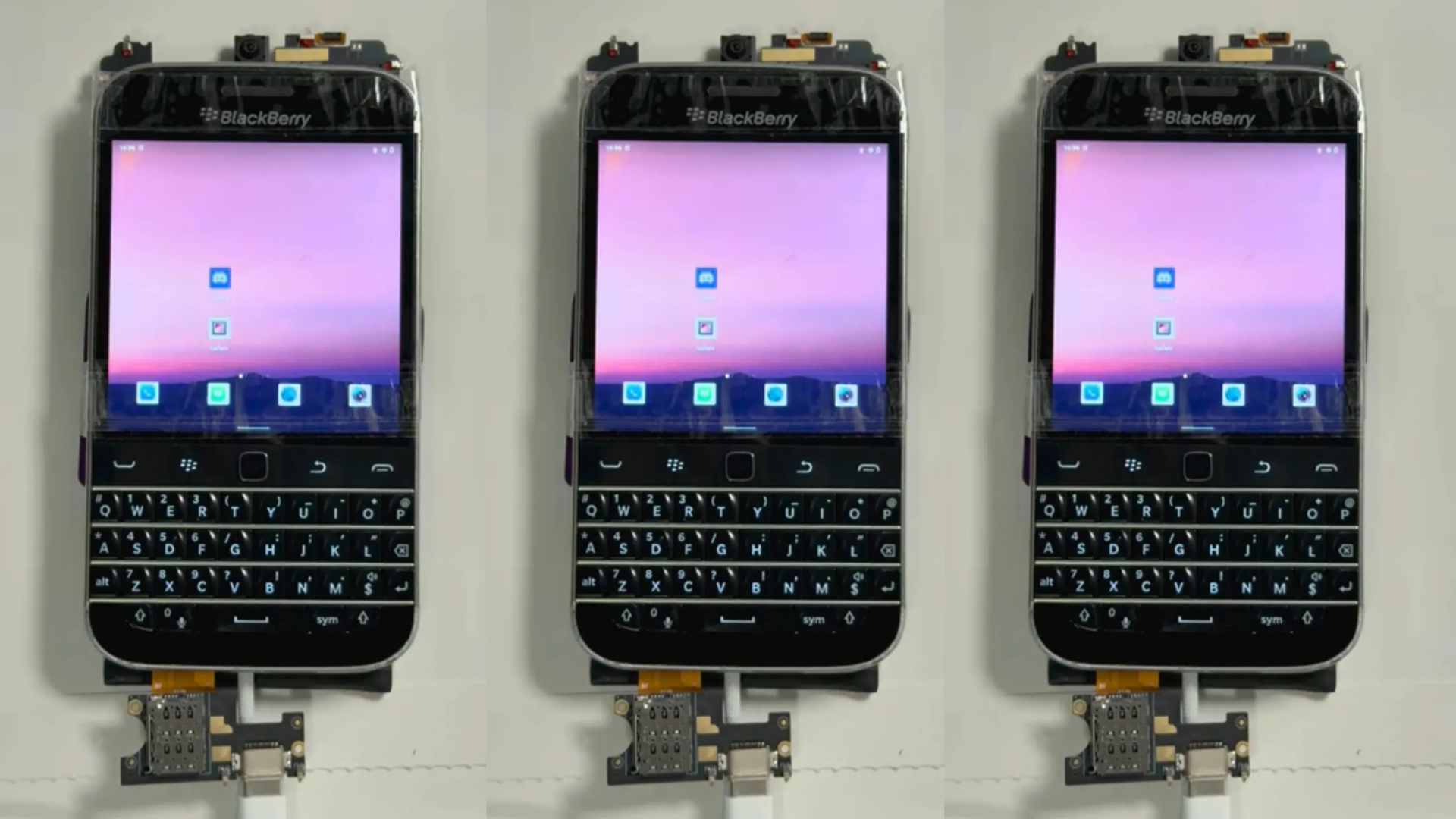
Zinwa Q27: A BlackBerry-inspired keyboard smartphone that fuses tactile typing with AI-powered productivity.
Travel and language are other frontiers where AI promises immediate, tangible benefits. A real-world example is a pocket translator such as Mesay 3.0 Pro AI Voice Translator, which promises real-time interpretation across multiple languages and contexts. In travel-heavy markets, such tools promise to dissolve language barriers, enabling travelers to negotiate, ask for directions, and engage locals with less friction. The cost model—often pitched as a consumer good with significant discounts during holiday promotions—highlights a broader strategy: AI devices that work without daily internet access, but benefit from cloud-assisted updates or offline capabilities when connectivity is limited. The Mesay family’s marketing emphasizes simplicity—one device, many languages, and the ability to switch between modes such as conversation, note-taking, or emergency phrases—while cautioning users about translation errors that still require human judgment. For travelers, that specification matters: AI is a companion, not a substitute for human nuance in every encounter. In a world rife with automated assistants, the real value often lies in the speed of understanding and the ability to ask clarifying questions. The translator market exemplifies how AI can democratize access to information, but it also raises questions about privacy, data handling, and the need for robust on-device processing to protect sensitive conversations.
Mesay 3.0 Pro AI Voice Translator—real-time translation for travelers (example listing).
Media, creativity, and discourse are increasingly shaped by AI, but not without pushback. A high-profile case involves The Onion's CEO publicly challenging the current state of AI joke-writing and content generation, arguing that the technology, if left unchecked, could undermine human judgment and the integrity of satire. The stance reflects a broader concern within creative industries: AI can accelerate content production, but the risk of commodifying originality and eroding authentic voice remains. Industry observers note that publishers, studios, and platforms are experimenting with guardrails, attribution standards, and licensing models to balance AI's benefits with the need to preserve human authorship and accountability. The Onion case also reveals how AI becomes a litmus test for corporate ethics: if an institution like The Onion views AI as a threat to the craft, what does that imply for the broader ecosystem that includes marketing teams, freelancers, and media outlets who rely on AI to draft, edit, or brainstorm ideas? The tension is not a parable about technology versus humanity; it is a practical debate about responsibility, transparency, and governance. For many readers, the takeaway is that AI can be a powerful assistant, provided it is used with clear standards, robust fact-checking, and a culture that values human oversight as a non-negotiable safeguard.

PCMag illustration: The Onion's leadership and AI content debate.
Security and resilience are increasingly central to any AI-forward narrative. A recent briefing from This Week In 4n6 highlights how attackers are exploiting AI-enabled development pipelines and cloud services to move laterally from GitHub to AWS and then to Salesforce using compromised OAuth tokens. The piece frames a sobering reality: as AI accelerates the speed at which software is created and deployed, the attack surface expands, and supply-chain integrity becomes a more urgent concern. Experts recommend a multi-layered approach: always-on anomaly detection, strict token management, hardware-based root-of-trust, and continuous monitoring across the software stack. The article also emphasizes the importance of threat intelligence sharing among vendors and customers to reduce dwell time—the interval in which attackers remain undetected. In practice, this means embedding AI-driven security tools into development workflows, from code review to deployment, and ensuring that security champions within organizations are empowered to halt questionable changes before they reach production. The convergence of AI and security is a doublesided coin: on one hand, AI can strengthen defensive capabilities; on the other, it creates new, more sophisticated attack vectors. Organizations that recognize this duality and invest accordingly will be better prepared to navigate the uncertain terrain of AI-enabled operations.
On the geopolitical stage, Global Trade Research Initiative researchers warn that nations must diversify their tech ecosystems to reduce reliance on US software, cloud services, and social media platforms. In India, a push to develop domestic capabilities and localize critical infrastructure reflects a growing awareness that supply chains can become chokepoints in times of political tension or economic sanctions. Policymakers and industry groups argue that resilience requires a mix of onshoring, multi-vendor strategies, and robust data standards that protect privacy while enabling cross-border collaboration. Critics caution that rapid localization could slow innovation if domestic ecosystems fail to attract the same level of investment and talent as global platforms. The balance, then, is to preserve openness where possible while strengthening domestic capacity in key areas such as AI research, cloud infrastructure, and cybersecurity. The broader implication is that AI's governance cannot be the exclusive province of any single country; it is an international concern that requires interoperable standards, transparent data practices, and cooperative enforcement. For companies, the takeaway is pragmatic: diversify suppliers, build redundancy into critical services, and invest in staff training to recognize and respond to evolving AI-powered threats.
Market narratives around AI continue to evolve, mixing optimism with caution. In the financial sphere, analysts watch Nvidia for potential stock volatility tied to AI hype, even as other AI-centric players— Microsoft, Oracle, and chipmakers—bet heavily on AI workloads. Tech outlets report on the rapid expansion of AI features across consumer devices and software, from AI-assisted chip design to on-device inference that reduces latency and preserves privacy. In parallel, the consumer tech ecosystem keeps an eye on banner events like the iPhone launch, where AI capabilities are often highlighted as distinguishing features. The financial pressure comes not only from high valuations but also from the need to demonstrate real, recurring AI-driven revenue. The result is a marketplace that rewards both breakthrough software and reliable execution. Companies are increasingly measured by their ability to maintain user trust, deliver accessible AI tools, and show credible progress toward governance, privacy, and fairness. The AI arms race has entered a phase where strategic partnerships and ecosystem playbooks matter as much as new apps and features. Investors expect meaningful product differentiation, transparent roadmaps, and measurable impact on margins, not just hype.
Another dimension of the AI era is consumer adoption and cultural adaptation of AI-generated content. Reports from Mint about Google Gemini moving to the top of the Apple App Store after a wave of Ghibli-inspired imagery shows how AI-driven art and prompts can alter consumer behavior and platform rankings. The evolution of image-generation tools, as reflected by Seedream 4.0 and similar offerings, suggests that fashion, media, and entertainment will be redefined by AI-assisted design processes. In parallel, translation and editing efficiencies—along with improved multilingual support—are enabling global audiences to share ideas more easily, even as questions about attribution and originality persist. The net effect is that AI is not a niche technology but a pervasive set of capabilities that reshape how we create, communicate, and evaluate information. Yet as access expands, so too does responsibility: platforms, developers, and policymakers must collaborate to ensure that AI remains a tool that augments human creativity rather than diminishes it. The coming years will likely see deeper investments in stylistic control, safety filters, and responsible AI practices, alongside a continued push toward more immersive, context-aware copilots.